Build vs Buy Software: Which Approach Is Right for Your Business?
.png)
Build vs Buy Software: How to Make the Right Business Decision
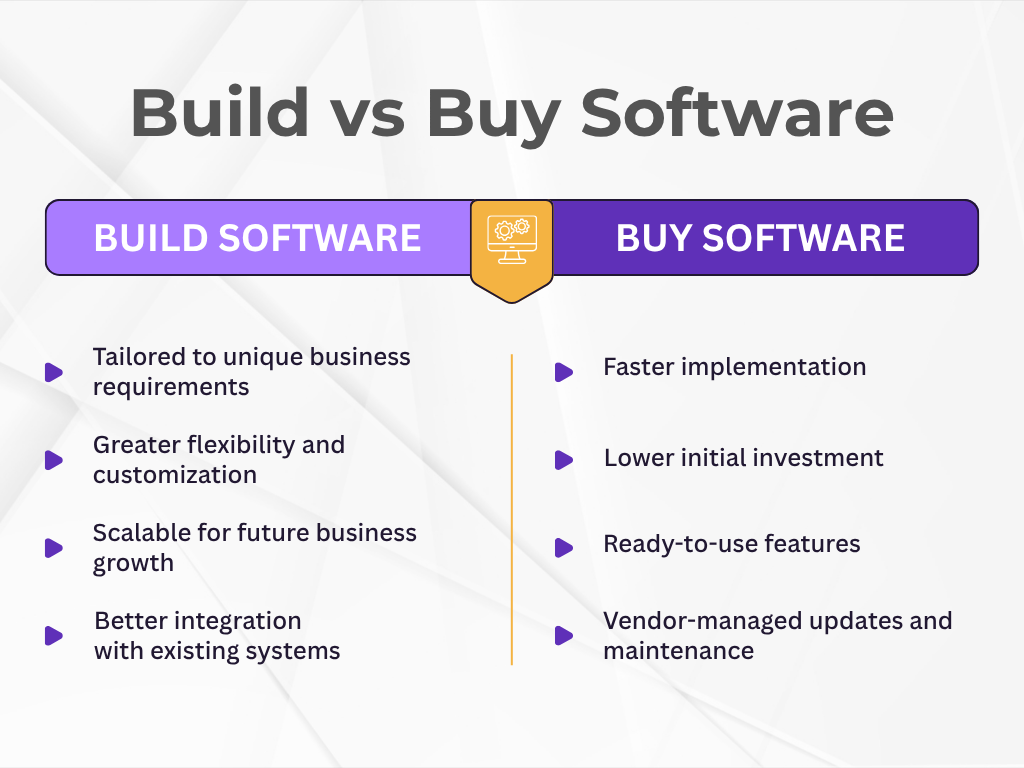
As organizations accelerate their digital transformation initiatives, choosing the right software strategy has become a critical business decision. One of the most common questions business leaders face is whether to build custom software tailored to their unique requirements or buy an off-the-shelf solution that can be implemented quickly. Both approaches offer distinct advantages, but selecting the right option depends on your organization's goals, operational complexity, budget, scalability requirements, and long-term technology strategy.
At T/DG, organizations are supported through every stage of the software conceptualization journey, helping them evaluate business requirements before investing in a technology solution. Understanding the build vs buy software decision enables businesses to minimize implementation risks, maximize return on investment, and adopt a solution that aligns with both current operational needs and future business growth. This guide explores the key differences, benefits, and decision-making factors to help you determine the right approach for your organization.
Custom Software vs SaaS: Understanding the Key Differences
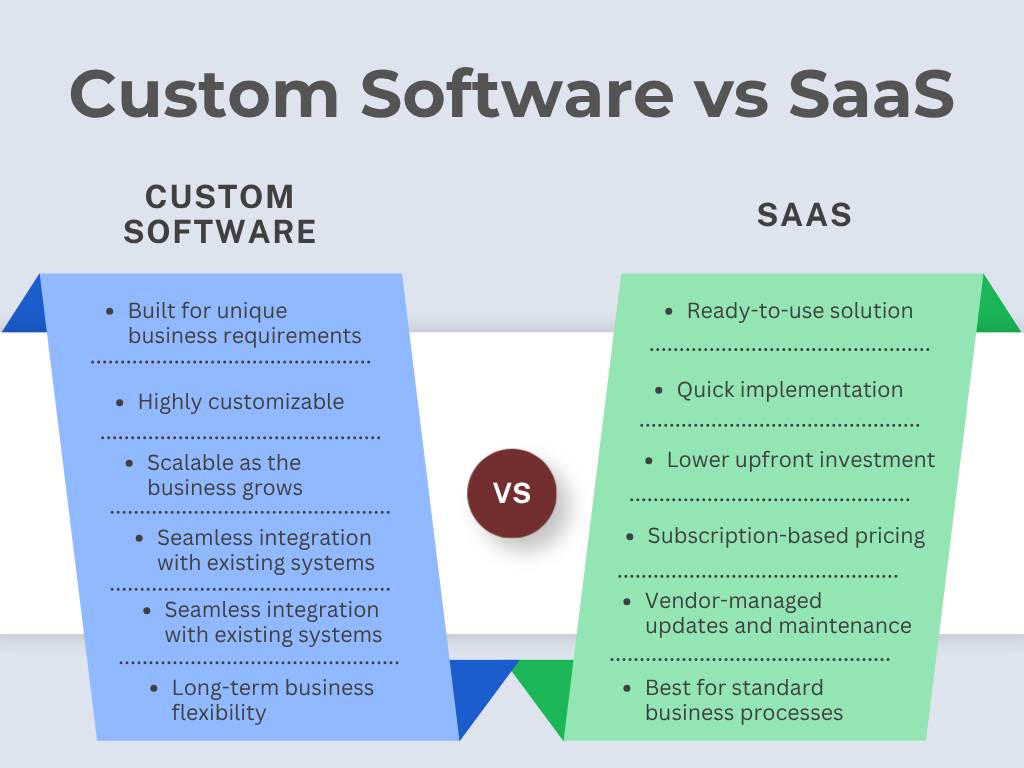
When evaluating custom software vs SaaS, organizations must consider how each solution aligns with their business objectives, operational requirements, and long-term growth plans. While both options help organizations digitize business processes, they differ significantly in terms of flexibility, customization, scalability, implementation, and ownership.
Custom software is built specifically to meet an organization's unique workflows, business processes, and strategic goals. It offers greater flexibility, seamless integration with existing systems, enhanced security, and the ability to scale as the business evolves. This approach is ideal for organizations with specialized operational requirements or those seeking a competitive advantage through technology.
On the other hand, Software as a Service (SaaS) provides ready-to-use applications that can be deployed quickly with minimal upfront investment. SaaS solutions are generally subscription-based and include regular updates and maintenance managed by the software provider. While they are suitable for organizations with standard business requirements, they may offer limited customization and flexibility as business needs become more complex.
Understanding the differences between custom software vs SaaS helps organizations determine whether they need a tailored solution designed around their business processes or a standardized platform that enables rapid deployment with lower initial investment.
How Enterprise Software Strategy Influences the Build vs Buy Decision
A successful enterprise software strategy goes beyond selecting the latest technology, it focuses on choosing solutions that support long-term business objectives, improve operational efficiency, and adapt to future growth. Whether an organization decides to build custom software or adopt an existing solution, the decision should be guided by strategic business priorities rather than short-term convenience.
An effective enterprise software strategy evaluates factors such as business complexity, scalability, integration requirements, security, compliance, total cost of ownership, and future expansion plans. Organizations with unique workflows or industry-specific processes often benefit from custom software that aligns closely with their operational needs. Conversely, businesses with standardized requirements may find that a ready-made solution offers a faster path to deployment while meeting their immediate objectives.
At T/DG, the software conceptualization approach helps organizations assess business challenges, define technology requirements, and develop an enterprise software strategy that supports sustainable growth. By aligning software investments with long-term business goals, organizations can reduce implementation risks, improve return on investment, and build a technology foundation that evolves alongside their business.
How Can You Evaluate Software ROI Before Making a Software Investment?
Every software investment should generate measurable business value rather than simply solving an immediate operational challenge. Evaluating software ROI involves assessing both the short-term and long-term impact of the solution, including improvements in productivity, operational efficiency, cost savings, customer experience, and business scalability. Looking beyond the initial implementation cost helps organizations make more strategic technology decisions.
When comparing build vs buy software, businesses should also consider ongoing expenses such as licensing fees, maintenance, upgrades, integrations, training, and future enhancements. While off-the-shelf solutions may offer faster deployment and lower upfront costs, custom software can deliver greater software ROI by aligning closely with business processes, reducing manual effort, and adapting to evolving organizational requirements.
At T/DG, the software conceptualization approach helps organizations evaluate business objectives, technical requirements, and expected outcomes before making a software investment. By carefully assessing software ROI and aligning technology decisions with long-term business goals, organizations can maximize the value of their investment while building a strong foundation for future growth and digital transformation.
Key Takeaways: Making the Right Software Decision for Long-Term Success
Choosing between building custom software and buying an off-the-shelf solution depends on your organization's business objectives, operational complexity, and long-term technology vision. While ready-made solutions may offer faster deployment for standard requirements, custom software provides the flexibility, scalability, and integration capabilities needed to support evolving business processes. A well-planned software strategy should not only address current operational needs but also enable future growth and innovation.
At T/DG, organizations are guided through every stage of software conceptualization to ensure technology investments align with long-term business goals. By selecting the right business applications and adopting a strategic approach to digital transformation, businesses can maximize operational efficiency, improve customer experiences, and achieve sustainable growth. Whether you choose to build or buy, making an informed decision today lays the foundation for a more agile, competitive, and future-ready enterprise.
Ready to make the right software decision? Connect with the T/DG team to explore solutions that align with your business goals and accelerate your digital transformation journey.
In our next blog, we'll explore the software discovery phase, its best practices, and why a well-defined discovery process is essential for building successful software solutions.
Key Questions About Building or Buying Software
What Is the Difference Between Building and Buying Software? Building software involves developing a custom solution tailored to your organization's specific business requirements, while buying software means adopting an existing off-the-shelf or SaaS solution. The right choice depends on your operational needs, budget, scalability, and long-term business objectives.
Is Custom Software Better Than SaaS? Absolutely. The answer depends on your business requirements. Custom software offers greater flexibility, seamless integrations, and scalability for organizations with unique workflows, whereas SaaS solutions are ideal for businesses seeking faster deployment and lower upfront investment for standard processes.
How Can Businesses Maximize Software ROI? Certainly. Businesses can improve software ROI by evaluating implementation costs, long-term maintenance, scalability, integration capabilities, and the overall impact on productivity and operational efficiency. Selecting a solution that aligns with long-term business goals helps maximize the return on every software investment.
Why Is Software Conceptualization Important Before Making a Software Investment? Yes. Software conceptualization helps organizations identify business challenges, define functional requirements, evaluate technology options, and reduce implementation risks before development begins. This structured approach ensures the final solution aligns with both business objectives and user expectations.
How Can T/DG Help Organizations Choose Between Building and Buying Software? Definitely. T/DG works closely with organizations to assess business requirements, evaluate technology strategies, and recommend the most suitable software approach. Through its software conceptualization services, T/DG helps businesses make informed decisions that support digital transformation, improve operational efficiency, and deliver long-term business value.
Write a comment

Subscribe To Our Newsletter
Join our mailing list to receive the latest blogs and updates.