How a Software Testing Checklist Improves Software Quality
Why Is a Software Testing Checklist Essential for Quality Assurance?
Delivering reliable software requires more than writing functional code. Every application must be thoroughly tested to ensure it performs as expected across different environments, meets business requirements, and provides a seamless user experience. Without a structured testing approach, organizations risk releasing software with defects that can affect performance, security, and customer satisfaction. A well-defined Software Testing Checklist helps teams validate every critical aspect of an application before deployment, reducing risks and improving overall software quality.
These quality assurance challenges can be effectively addressed through T/DG's software testing offerings, which combine proven testing methodologies with domain expertise to deliver comprehensive testing solutions. From functional and performance testing to security and automation testing, T/DG helps organizations establish a systematic testing process that improves software reliability, accelerates release cycles, and ensures applications meet the highest quality standards. This guide explores the essential components of a Software Testing Checklist and why it is a critical part of successful software delivery.
What Should Every QA Checklist Include Before a Software Release?
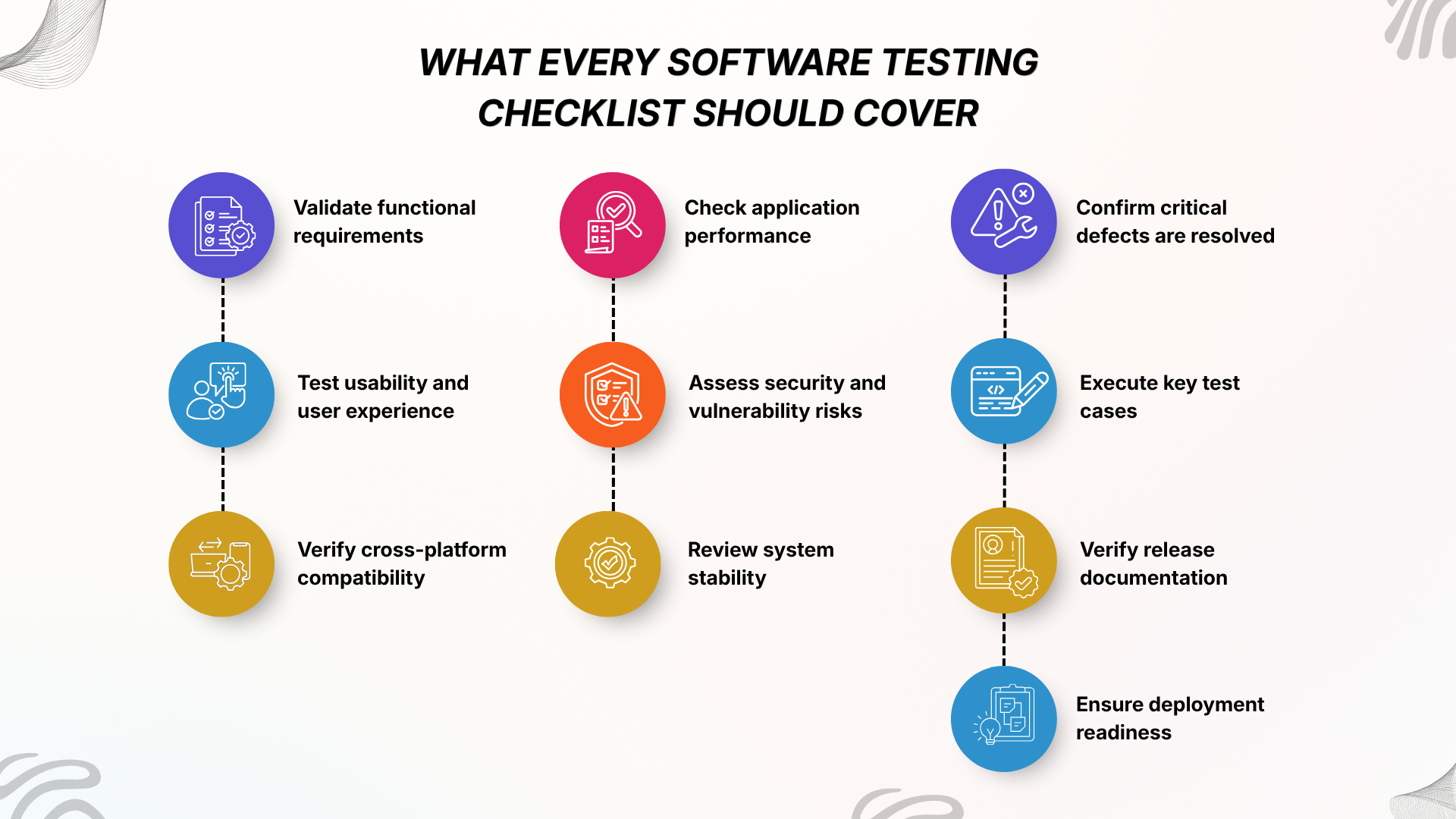
A comprehensive QA checklist helps testing teams verify that every critical aspect of an application has been reviewed before it moves to production. It serves as a structured framework for validating functional requirements, usability, compatibility, performance, security, and overall system stability. Following a standardized checklist reduces the likelihood of missed test scenarios and helps maintain consistency across every testing cycle.
Similarly, a Software release checklist ensures that all testing activities are completed before deployment. It confirms that identified defects have been resolved, critical test cases have passed, documentation has been updated, and the application is ready for release. By following a well-defined release checklist, organizations can minimize deployment risks, improve software reliability, and deliver a smoother experience to end users.
Why Is Pre-Release Testing Critical Before Software Deployment?
Pre-release testing is the final validation stage before an application is deployed to production. It helps organizations confirm that the software functions as intended under real-world conditions and that all critical business, technical, and user requirements have been successfully met. This stage also provides an opportunity to identify any remaining issues that could impact system performance, security, or user experience after release.
A thorough pre-release testing process includes validating completed defect fixes, executing regression tests, verifying integrations, confirming environment readiness, and ensuring deployment requirements have been fulfilled. By conducting comprehensive validation before launch, organizations can reduce release risks, improve software stability, and deliver applications that perform reliably from day one.
Why Are Regression Testing and UAT Essential Before Release?
Before software is released, it is important to verify that new updates or bug fixes have not affected existing functionality. Regression testing helps ensure that previously tested features continue to work as expected after code changes, reducing the risk of introducing new defects. By validating the stability of the application after every update, organizations can maintain software reliability and deliver consistent user experiences.
A well-defined UAT checklist (User Acceptance Testing checklist) ensures that the application meets business requirements and is ready for use by end users. During this stage, business stakeholders validate critical workflows, confirm that functional expectations have been met, and identify any remaining issues before deployment. Together, regression testing and user acceptance testing provide the confidence that software is production-ready and aligned with both technical and business objectives.
How Does a Strong Quality Assurance Process Improve Software Reliability?
A well-defined Quality assurance process provides a structured approach to verifying software quality throughout the development lifecycle rather than only at the final testing stage. It establishes clear testing standards, validation procedures, defect management practices, and continuous quality checks that help teams identify issues early and maintain consistency across every release. This proactive approach reduces the cost of fixing defects and supports the delivery of reliable software.
An effective quality assurance process also encourages collaboration between development, testing, and business teams, ensuring that quality remains a shared responsibility. At T/DG, software testing offerings help organizations implement comprehensive quality assurance practices that improve application performance, reduce deployment risks, and deliver software solutions that meet business objectives while providing a seamless user experience.
Key Takeaways from a Software Testing Checklist
A well-structured Software Testing Checklist plays a vital role in delivering reliable, secure, and high-performing software. From validating functional requirements and completing pre-release testing to performing regression testing and user acceptance testing, every stage of the checklist contributes to reducing deployment risks and improving software quality. By following a systematic testing approach, organizations can identify defects early, enhance application stability, and ensure a seamless experience for end users.
At T/DG, software testing offerings help organizations establish comprehensive quality assurance strategies that align with their business objectives and software development goals. By combining proven testing methodologies, automation capabilities, and domain expertise, T/DG enables businesses to accelerate release cycles, improve application performance, and deliver software with confidence.
Looking to strengthen your software quality strategy? Connect with our experts to discover how T/DG's software testing offerings can help you deliver reliable, secure, and high-quality software solutions.
In our next blog, we'll compare Manual Testing vs Automation Testing to help you understand their key differences, benefits, and how to choose the right testing approach for your software projects.
Here's What Businesses Usually Ask About Software Testing
What Is a Software Testing Checklist?
A Software Testing Checklist is a structured list of testing activities used to verify that an application meets functional, performance, security, and quality requirements before it is released. It helps teams ensure that no critical validation steps are overlooked.
Why Is a QA Checklist Important Before Software Release? Because it helps ensure consistent software quality. A QA checklist guides testing teams through essential validation activities, reducing the risk of missed test scenarios, unresolved defects, and production issues before deployment.
What Is the Purpose of Pre-Release Testing? To validate software before deployment. Pre-release testing confirms that the application is stable, meets business requirements, and is ready for production by verifying functionality, integrations, performance, and deployment readiness.
Why Are Regression Testing and UAT Important? They help ensure software reliability and business readiness. Regression testing verifies that existing features continue to work after changes, while a UAT checklist enables business users to validate that the application meets their operational requirements before release.
How Can T/DG Improve Your Software Quality Assurance Process? Through comprehensive Software Testing Offerings. T/DG helps organizations implement structured testing strategies that include functional, automation, performance, and security testing. This enables businesses to improve software quality, reduce release risks, and deliver reliable applications with confidence.
Write a comment

Subscribe To Our Newsletter
Join our mailing list to receive the latest blogs and updates.