Manufacturing Software Development Explained for Enterprise Businesses
Why Is Manufacturing Software Development Essential for Today's Manufacturing Industry?
Manufacturers are under constant pressure to improve productivity, optimize operations, reduce costs, and respond quickly to changing market demands. Relying on disconnected systems and manual processes often creates operational bottlenecks, limits visibility across departments, and affects overall business performance. This is where manufacturing software development helps organizations build tailored digital solutions that simplify complex manufacturing processes, improve operational efficiency, and support informed decision-making.
These challenges can be addressed with T/DG's ERP and Line of Business Integration services, which help manufacturers connect critical business applications, production systems, and enterprise platforms into a unified ecosystem. By enabling seamless data flow across departments, organizations can improve collaboration, automate business processes, and gain real-time operational visibility. This guide explores how Manufacturing Software Development supports manufacturing businesses and why integrated software solutions have become essential for sustainable business growth.
How Do Manufacturing Software Solutions Improve Business Operations?
Manufacturing software solutions are designed to help organizations manage production, inventory, procurement, quality control, and other critical business processes through a centralized digital platform. Unlike generic business applications, industry software is developed to address the unique operational requirements of manufacturing organizations, enabling greater process visibility, improved resource utilization, and more efficient decision-making across the production lifecycle.
As manufacturers continue to embrace manufacturing automation, software plays a vital role in reducing manual intervention and improving operational consistency. By automating routine workflows and connecting production data with business systems, organizations can improve productivity, minimize operational delays, and respond more effectively to changing customer and market demands. This creates a more connected manufacturing environment that supports efficiency, scalability, and continuous operational improvement.
Why Is ERP Integration Important for Manufacturing Businesses?
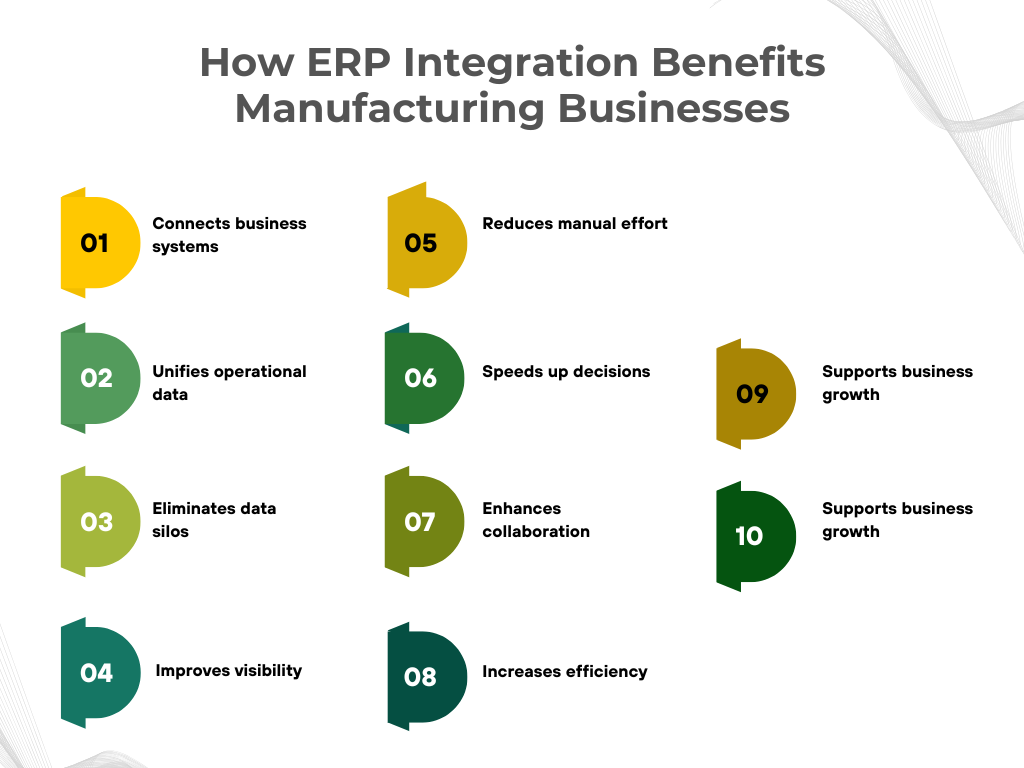
Manufacturing operations involve multiple departments, including production, inventory, procurement, finance, sales, and supply chain management. When these functions operate on separate systems, information often becomes fragmented, resulting in delays, duplicate data, and reduced operational visibility. Integrating these systems enables businesses to create a connected environment where information flows seamlessly across departments.
At T/DG, ERP and line of business integration helps manufacturers connect enterprise applications with business-critical systems to improve collaboration and decision-making. A unified technology ecosystem provides real-time access to operational data, reduces manual data entry, and supports faster business processes. This enables organizations to make informed decisions, improve process efficiency, and create a stronger foundation for future digital initiatives.
How Do MES Integration and Factory Automation Improve Manufacturing Performance?
As manufacturing environments become more connected, real-time visibility into production operations has become essential. MES integration connects shop floor activities with enterprise systems, enabling manufacturers to monitor production, track work orders, capture machine data, and identify bottlenecks as they occur. This creates a seamless flow of information between production teams and business functions, allowing faster decision-making and improved operational control.
Factory automation further enhances manufacturing efficiency by reducing manual intervention in repetitive processes and improving production consistency. When integrated with ERP and other business applications, automated production data becomes readily available across the organization, helping manufacturers optimize resource utilization, improve product quality, minimize downtime, and respond more effectively to changing production requirements. This connected approach enables organizations to build smarter and more efficient manufacturing operations.
How Does Smart Manufacturing Improve Production Efficiency?
Smart manufacturing enables organizations to make faster, data-driven decisions by connecting people, processes, and technology across the production environment. Instead of relying on disconnected systems and delayed reporting, manufacturers gain real-time visibility into production performance, equipment utilization, inventory movement, and operational workflows. This helps businesses identify inefficiencies early, improve production planning, and respond quickly to changing customer demands.
By integrating manufacturing systems with enterprise applications, organizations can create a connected ecosystem that supports continuous improvement across the factory. At T/DG, ERP and Line of Business Integration helps manufacturers unify business and operational data, enabling better collaboration between departments and greater visibility into end-to-end manufacturing processes. This approach allows businesses to embrace smart manufacturing while building a scalable foundation for future innovation and operational excellence.
Key Takeaways for Manufacturing Software Development
Manufacturing Software Development enables organizations to overcome operational challenges by connecting production systems, business applications, and enterprise processes through a unified technology ecosystem. From improving operational visibility and streamlining workflows to supporting automation and real-time decision-making, the right software strategy helps manufacturers increase productivity while adapting to evolving business demands. Investing in integrated digital solutions also creates a strong foundation for long-term operational excellence and sustainable growth.
At T/DG, ERP and Line of Business Integration helps manufacturers unify business-critical applications to improve collaboration, simplify operations, and drive greater efficiency across the enterprise. Whether you're modernizing legacy systems or building a connected manufacturing environment, T/DG's product engineering expertise helps organizations develop scalable software solutions that align with their business objectives.
Ready to accelerate your manufacturing transformation? Connect with our experts to discover how T/DG's ERP and Line of Business Integration services can help you build connected, efficient, and future-ready manufacturing operations.
In our next blog, we'll explore how Generative AI in Software Development is transforming the way organizations build, test, and optimize software while accelerating innovation and improving development efficiency.
Key Questions About Manufacturing Software Development
What Is Manufacturing Software Development? Manufacturing Software Development involves designing and building software solutions that help manufacturers manage production, inventory, supply chain, procurement, quality control, and other business operations. These solutions are tailored to meet specific manufacturing requirements and improve operational efficiency.
How Does Manufacturing Software Improve Business Operations? By connecting critical manufacturing processes. Manufacturing software provides better visibility into production, streamlines workflows, reduces manual effort, and enables organizations to make faster, data-driven decisions across departments.
Why Is ERP Integration Important for Manufacturers? Because it creates a connected business ecosystem. Integrating ERP with line of business applications enables seamless data flow between production, inventory, finance, procurement, and sales, improving collaboration and operational efficiency.
How Do MES Integration and Factory Automation Benefit Manufacturing Businesses? By improving production visibility and operational control. MES integration connects shop floor activities with enterprise systems, while factory automation reduces manual intervention, enhances production consistency, and helps manufacturers optimize resource utilization.
How Can T/DG Support Manufacturing Software Development? Through integrated Product Engineering and ERP expertise. T/DG helps manufacturers develop scalable software solutions and integrate enterprise applications with business-critical systems. This enables organizations to streamline operations, improve productivity, and build a connected manufacturing environment that supports long-term business growth.
Write a comment

Subscribe To Our Newsletter
Join our mailing list to receive the latest blogs and updates.