Why Is Data Quality Management Essential for Better Business Decisions?
What Is Data Quality Management?
Data has become one of the most valuable assets for modern organizations, driving everything from strategic planning and operational efficiency to customer experiences and business innovation. However, as businesses collect and manage increasing volumes of information from multiple sources, maintaining accurate, consistent, and reliable data has become more challenging. Poor-quality data can affect reporting, reduce operational efficiency, and limit an organization's ability to make informed business decisions.
This is where data quality management plays a vital role. It helps organizations maintain accurate, complete, consistent, and trustworthy data across business systems, enabling better decision-making and improved operational performance. By implementing structured data quality practices, businesses can enhance data reliability, support regulatory compliance, improve business intelligence initiatives, and create a strong foundation for digital transformation. T/DG helps organizations implement effective data quality management strategies that maximize the value of enterprise data while supporting long-term business growth and operational excellence.
Why Is Data Quality Management Critical for Business Success?
Organizations today rely on data to support strategic planning, customer engagement, operational efficiency, and business growth. As data volumes continue to increase across multiple systems and business functions, maintaining reliable information has become increasingly important. Inaccurate, incomplete, or inconsistent data can affect reporting, reduce operational visibility, and limit an organization's ability to make timely and informed business decisions. This is why many organizations are investing in data quality tools to identify data inconsistencies, improve data accuracy, and maintain trusted information across enterprise systems.
Data quality management helps organizations establish a trusted data foundation by ensuring that enterprise data remains accurate, consistent, complete, and fit for business use. Modern data quality tools enable businesses to monitor data quality, standardize information, eliminate duplicate records, and support ongoing data governance initiatives. By improving data reliability, organizations can enhance operational efficiency, strengthen business intelligence, support regulatory compliance, and deliver better customer experiences. T/DG helps businesses implement comprehensive data quality management strategies and leverage data quality tools to optimize enterprise data assets, improve decision-making, and accelerate digital transformation initiatives.
What Are the Key Benefits of Data Cleansing Services?
Maintaining high-quality data is essential for organizations that rely on accurate information to support daily operations and long-term business strategies. Data cleansing services help businesses improve the quality, consistency, and reliability of enterprise data, creating a stronger foundation for decision-making and operational efficiency.
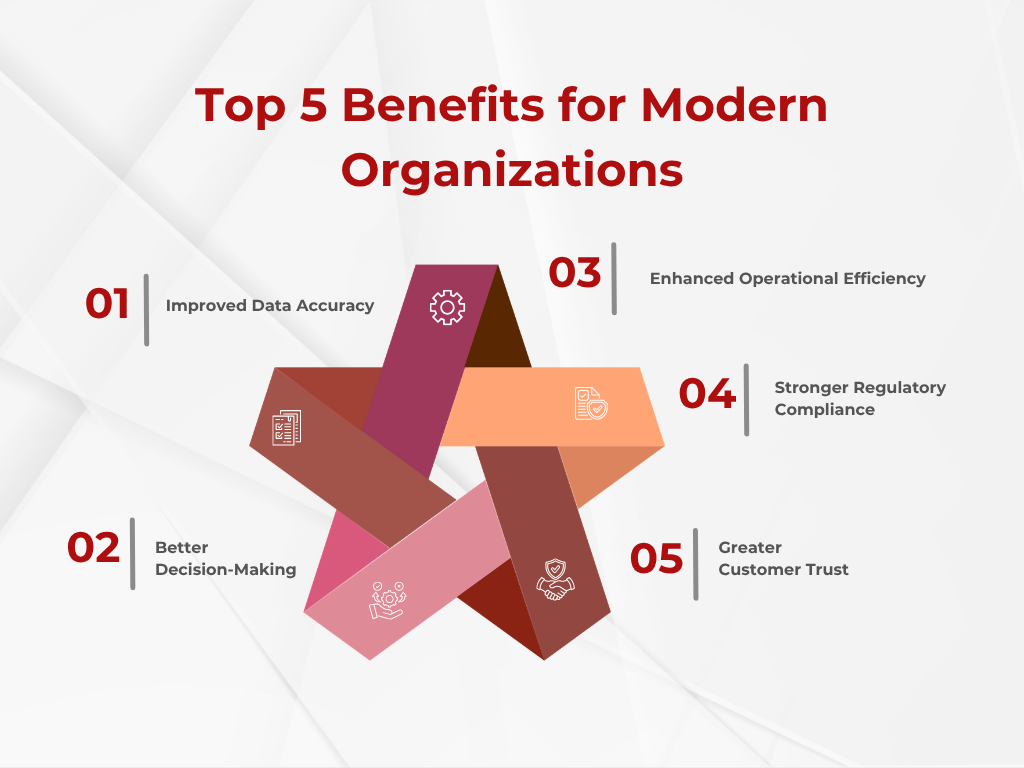
Top 5 Benefits for Modern Organizations
- Improved Data Accuracy – Eliminate duplicate, incomplete, and inconsistent records to maintain trusted business information.
- Better Decision-Making – Enable leaders to make informed decisions based on reliable and consistent data.
- Enhanced Operational Efficiency – Reduce manual corrections and streamline business processes across departments.
- Stronger Regulatory Compliance – Maintain accurate records that support governance, compliance, and audit requirements.
- Greater Customer Trust – Deliver better customer experiences through accurate, up-to-date, and consistent customer information.
By improving enterprise data quality, organizations can maximize the value of their data assets, strengthen business performance, and support long-term digital transformation initiatives.
How Can Organizations Improve Data Quality for Better Business Decisions?
Reliable business decisions begin with reliable data. As organizations continue to generate information from multiple systems, applications, and business processes, maintaining consistent and trustworthy data becomes increasingly important. Businesses that proactively improve data quality are better equipped to respond to changing market conditions, enhance operational performance, and gain meaningful insights from their data assets.
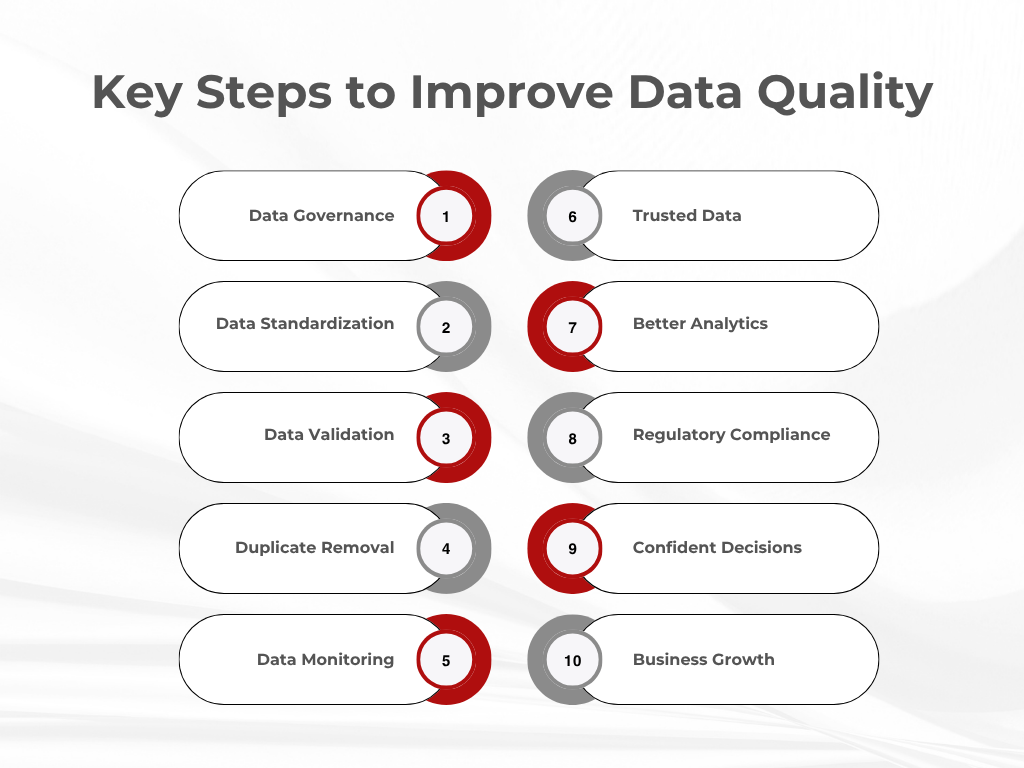
Understanding how to improve data quality for better business decisions starts with implementing a structured data management strategy. Organizations should establish clear data governance practices, standardize data across systems, validate information regularly, eliminate duplicate and outdated records, and continuously monitor data quality throughout its lifecycle. These practices help create a trusted data environment that supports reporting, analytics, regulatory compliance, and business intelligence initiatives.
T/DG helps organizations build comprehensive data quality frameworks that improve data reliability, strengthen governance, and enable confident decision-making. By transforming raw data into accurate and actionable business information, organizations can improve operational efficiency, reduce business risks, and create a strong foundation for sustainable growth and digital transformation.
Key Takeaways on Data Quality Management
High-quality data is the foundation of confident decision-making, operational efficiency, and sustainable business growth. As organizations continue to expand their digital ecosystems, maintaining accurate, consistent, and reliable enterprise data becomes increasingly important. A well-defined data quality management strategy helps businesses improve data integrity, strengthen governance, enhance analytics, and maximize the value of their enterprise information.
T/DG helps organizations transform fragmented and inconsistent data into trusted business assets through comprehensive data quality management solutions. By improving data accuracy and reliability, businesses can optimize operations, support compliance, enable better business intelligence, and accelerate their digital transformation journey with confidence.
Ready to build a trusted data foundation for your organization? Connect with our team at info.thedigitalgroup@thedigitalgroup.com to discover how our data quality management solutions can help you unlock the full potential of your enterprise data.
Frequently Asked Questions About Data Quality Management
What Is Data Quality Management? Data quality management is the process of ensuring that enterprise data remains accurate, complete, consistent, valid, and reliable throughout its lifecycle. It helps organizations improve decision-making, enhance operational efficiency, and maximize the value of business data.
Can Data Quality Tools Improve Business Performance? Absolutely. Data quality tools help organizations identify data inconsistencies, eliminate duplicate records, standardize information, and continuously monitor data quality. This enables businesses to improve reporting accuracy, strengthen analytics, and make more informed business decisions.
Are Data Cleansing Services Important for Organizations? Certainly. Data cleansing services help organizations correct inaccurate, incomplete, duplicate, or outdated information across enterprise systems. Clean and reliable data supports better customer experiences, improved operational efficiency, and stronger regulatory compliance.
How Can Organizations Improve Data Quality for Better Business Decisions? Yes. Organizations can improve data quality by implementing data governance practices, standardizing data across systems, validating information regularly, removing duplicate records, and continuously monitoring data accuracy. These practices help create a trusted data foundation for confident decision-making.
Should Businesses Invest in Data Quality Management? Definitely. Investing in data quality management helps organizations improve data reliability, support business intelligence initiatives, optimize operational performance, reduce business risks, and establish a strong foundation for digital transformation and long-term business growth.
Write a comment

Subscribe To Our Newsletter
Join our mailing list to receive the latest blogs and updates.